Evelyn Glennie shows how to listen
PS: is this a Scottish accent ?
48.237489
16.355674
PS: is this a Scottish accent ?
 ” The world we live in Now” serves the purpose to show how everything is connected. I am using publications from the (liberal) media, in general written by independent experts, so we have a halfways neutral perspective. It also serves the purpose to point out that old systems are indeed crumbling, with a chance to simply – disappear.
This does not need to be scary. In fact, this is a great time to not let uncertainty get the better of us. It is our job now to be as optimistic as we can be. Not by denying reality, but by viewing all the changes as a fertile ground for a New Earth to arise.
We all are part of it. We all are called to assist it’s birth.
What is it we see ? We see the market economy crumble, together with the monetary system. Related to this are such fundamental questions like the value of work and employment, democracy and the widening gap between the interest of governments and the people who they are supposed to represent, or have even voted for them, we see the effect of a wasteful management of resources and energy, as well as the effects of natural disasters on food and food prices.
And we see the empowerment of the individual by means of interconnectedness.
Indeed, it is important for everyone to realise that we are not powerless. It is up to us if we let the world sink into a nightmare, or change the quality of the dream. Yes, many people are suffering in the world of today, there is much chaos, upheaval, disease, unfairness and violence. But there are also so many signs of people standing up and taking things into their own hands, much to the benefit of those around them.
I would be interested to hear of your experiences and observations. It does not need to be huge – just examples how an old world, that was driven by unconscious forces of greed and separation, is turning into an unified New Earth, that is emerging upon a foundation of respect for nature, resources and people. A New Earth that does not follow the quest of the individual for personal gain and comfort, but rather the natural impulse to serve common good and wellbeing, in an understanding that we are not separate from each other.
By Stephe S. Roach
The global economy is in the midst of its second growth scare in less than two years. Get used to it. In a post-crisis world, these are the footprints of a failed recovery.
The reason is simple. The typical business cycle has a natural cushioning mechanism that wards off unexpected blows. The deeper the downturn, the more powerful the snapback, and the greater the cumulative forces of self-sustaining revival. Vigorous V-shaped rebounds have a built-in resilience that allows them to shrug off shocks relatively easily.
But a post-crisis recovery is a very different animal. As Carmen Reinhart and Kenneth Rogoff have shown in their book This Time is Different, over the long sweep of history, post-crisis recoveries in output and employment tend to be decidedly subpar.
Such weak recoveries, by definition, lack the cushion of V-shaped rebounds. Consequently, external shocks quickly expose their vulnerability. If the shocks are sharp enough – and if they hit a weakened global economy that is approaching its “stall speed” of around three per cent annual growth – the relapse could turn into the dreaded double-dip recession.
That is the risk today. There can be no mistaking the decidedly subpar character of the current global recovery. Superficially, the numbers look strong: world GDP rebounded by 5.1 per cent in 2010, and is expected to rise another 4.3 per cent in 2011, according to the International Monetary Fund. But because these gains follow the massive contraction that occurred during the Great Recession of 2008-2009, they are a far cry from the trajectory of a classic V-shaped recovery.
By Naomi Wolf
It is hard to ignore how many highly visible men in recent years (indeed, months) have behaved in sexually self-destructive ways. Some powerful men have long been sexually voracious; unlike today, though, they were far more discreet and generally used much better judgment in order to cover their tracks.
Of course, the heightened technological ability nowadays to expose private behavior is part of the reason for this change. But that is precisely the point: so many of the men caught up in sex-tinged scandals of late have exposed themselves – sometimes literally – through their own willing embrace of text messages, Twitter, and other indiscreet media.
What is driving this weirdly disinhibited decision-making? Could the widespread availability and consumption of pornography in recent years actually be rewiring the male brain, affecting men’s judgment about sex and causing them to have more difficulty controlling their impulses?
The story of a courageous young woman, changing the lives of many others. Of course, this leads to resistance from those who want to keep the old status quo, that seems to serve them, as well as beliefs and traditions. This is a story that faith and courage can overcome even the most hideous obstacles.
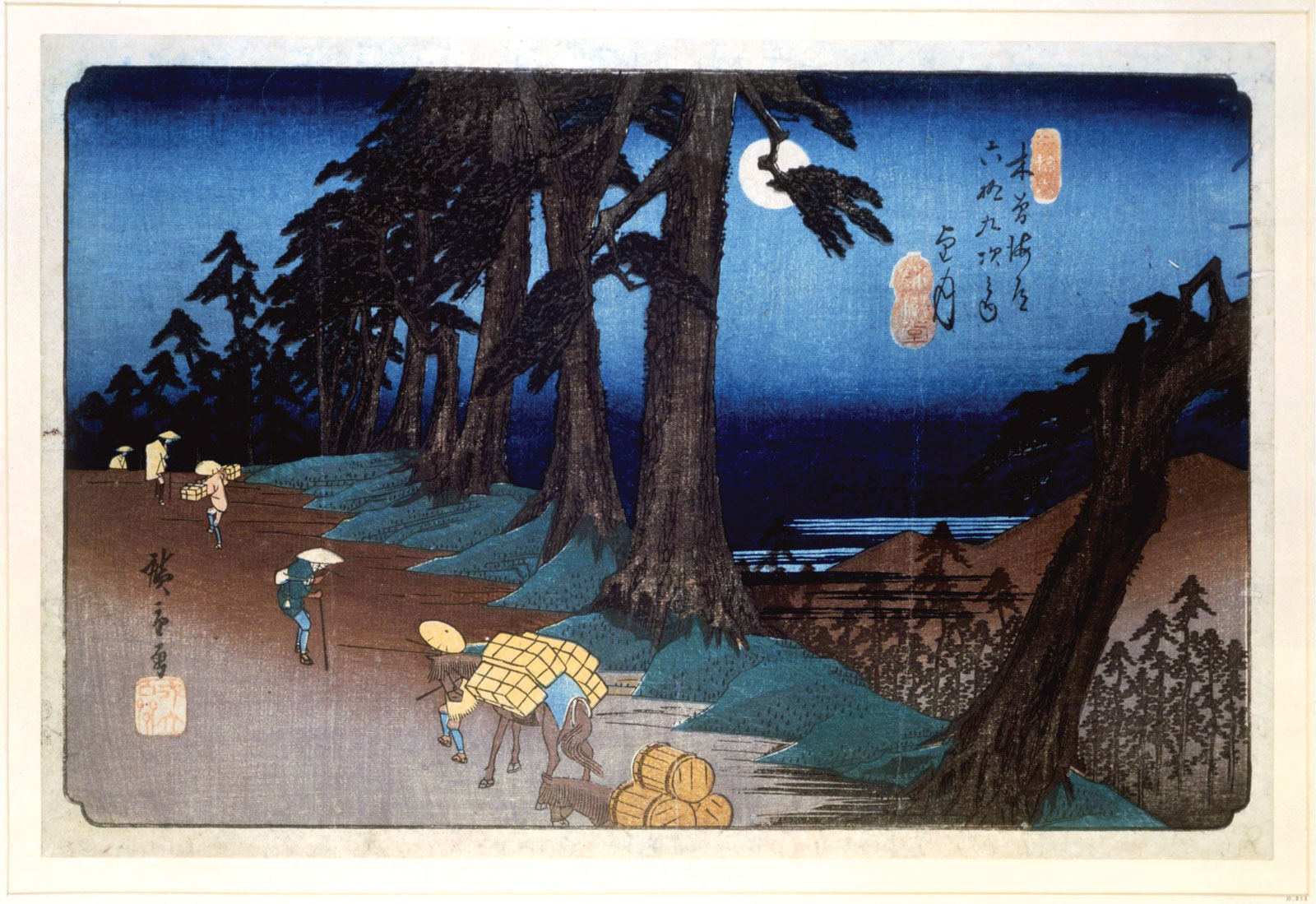
The rain has stopped, the clouds have drifted away,
and the weather is clear again.
If your heart is pure, then all things in your world are pure.
Abandon this fleeting world, abandon yourself,
Then the moon and flowers will guide you along the way.T. Ryokan
Zeitgeist Moving Forward Official Release 2011
Are you one of us?
The patient wanted to know, and her therapist — Marsha M. Linehan of the University of Washington, creator of a treatment used worldwide for severely suicidal people — had a ready answer. It was the one she always used to cut the question short, whether a patient asked it hopefully, accusingly or knowingly, having glimpsed the macramé of faded burns, cuts and welts on Dr. Linehan’s arms:
“You mean, have I suffered?”
“No, Marsha,” the patient replied, in an encounter last spring. “I mean one of us. Like us. Because if you were, it would give all of us so much hope.”
“That did it,” said Dr. Linehan, 68, who told her story in public for the first time last week before an audience of friends, family and doctors at the Institute of Living, the Hartford clinic where she was first treated for extreme social withdrawal at age 17. “So many people have begged me to come forward, and I just thought — well, I have to do this. I owe it to them. I cannot die a coward.”
 The series ” The world we live in Now” has been an experiment.
For some time now I have been posting articles I found across a wide selection of media. I tried to stick to articles written by independent experts and reflect a picture based on facts, avoiding speculation.
I have been painting a picture of the world we live in Now.
To me this is a world that is re-inventing itself. A world that in rapid pace is shedding old beliefs, systems and structure. The emerging topics are true democracy, self-organisation and a new economic model, largely free from the driving forces of consumerism and monetary system. That goes along with great concern and care for natural resources, the responsible use of energy and preservation of ecological systems. It will lead to new societal values, a new definition of government and administration – without the need to politics – and by and large a departure from the current economic, political and societal systems we have come to get used to. For they have served their purpose and now they are failing.
Brave New Earth.
By Nouriel Roubini
Despite the series of low-probability, high-impact events that have hit the global economy in 2011, financial markets continued to rise happily until a month or so ago. The year began with rising food, oil, and commodity prices, giving rise to the specter of high inflation.
Then massive turmoil erupted in the Middle East, further ratcheting up oil prices. Then came Japan’s terrible earthquake, which severely damaged both its economy and global supply chains. And then Greece, Ireland, and Portugal lost access to credit markets, requiring bailout packages from the International Monetary Fund and the European Union.
But that was not the end of it. Although Greece was bailed out a year ago, Plan A has now clearly failed. Greece will require another official bailout – or a bail-in of private creditors, an option that is fueling heated disagreement among European policymakers.










 The Living Room