Bank run

By Paul Krugman

On Thursday Jean-Claude Trichet, the president of the European Central Bank or E.C.B. — Europe’s equivalent to Ben Bernanke — lost his sang-froid. In response to a question about whether the E.C.B. is becoming a “bad bank” thanks to its purchases of troubled nations’ debt, Mr. Trichet, his voice rising, insisted that his institution has performed “impeccably, impeccably!” as a guardian of price stability.

Indeed it has. And that’s why the euro is now at risk of collapse.

Financial turmoil in Europe is no longer a problem of small, peripheral economies like Greece. What’s under way right now is a full-scale market run on the much larger economies of Spain and Italy. At this point countries in crisis account for about a third of the euro area’s G.D.P., so the common European currency itself is under existential threat.

And all indications are that European leaders are unwilling even to acknowledge the nature of that threat, let alone deal with it effectively.

Continue reading

Posted in Breaking the mould, The world we live in Now | Tagged , , , , , , | 1 Comment

A day in September

It was a beautiful day in early September. Blue, translucent sky and crisp air.

I was on my way to a meeting and I had to walk to another building across the compound. That was when I first heard the news: ” There was an explosion at the World Trade Centre in New York”. As I reached the lobby, someone had switched on the TV and we all watched in disbelief the destruction and smoke that was coming from the tower.

In that moment my mobile phone rang.

The evening before I had decided to change plans and cancel a trip to New York. My friend and co-worker went in my place and she became a witness watching  the events from Mercer Street, maybe a mile away from the towers. I was on the phone with her as the second plane hit and later as the towers fell.

We were busy over the next 3 or 4 days trying to get her out of the city. In the end she took a cab and crossed over Washington Bridge into Jersey and drove all the way up to Chicago in a rental car.

When the weekend came, we all had changed forever.

A couple of years later  I lived in Manhattan myself. One day a friend called me to tell me that a sports plane had crashed into a building not far from my neighborhood. I will never forget the ash-grey faces of the people who went by. It was like a nightmare had returned, even though it was just an accident and the fire was soon under control.

Then I knew that Manhattan had suffered a trauma no-one could ever forget.

8 Comments

I felt terrible

Colin Powell on making a case for war with Iraq  at the United Nations

Posted in The world we live in Now | Tagged , , | 2 Comments

A day in September

“What happens, changes what happens next” 
Sir Karl Popper

A full issue of the New Yorker dedicated to 9/11 and how it changed New York, America and the world.

The New Yorker, Sep 12, 2011

Enjoy !

Posted in The world we live in Now | Leave a comment

The megaphone

The media, war on terror and failing to ask the tough questions.

Posted in Breaking the mould | Tagged , , , | 2 Comments

The Intelligence War

This is the story of the secret war behind the ‘war on terror’.

Posted in Breaking the mould, The world we live in Now | Tagged | 4 Comments

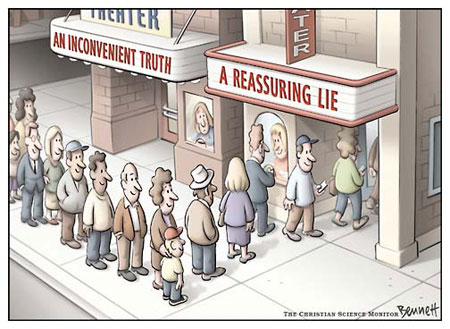
Tell the truth

 By Kishore Mahbubani

Dictators are falling. Democracies are failing. A curious coincidence? Or is it, perhaps, a sign that something fundamental has changed in the grain of human history. I believe so.

How do dictators survive? They tell lies. Muammer Gaddafi was one of the biggest liars of all time. He claimed that his people loved him. He also controlled the flow of information to his people to prevent any alternative narrative taking hold. Then the simple cell phone enabled people to connect. The truth spread widely to drown out all the lies that the colonel broadcast over the airwaves. Similarly in Egypt and Tunisia,the regimes lost control of the narrative. In short, technology has undermined dictators’ ability to lie to their people.

Continue reading

Posted in Breaking the mould, The world we live in Now | Tagged , , | 4 Comments

Inner work life

By Teresa Amabile

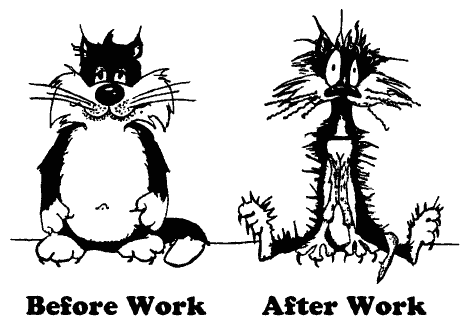
Labor Day is meant to be a celebration of work. Yet, on this Labor Day, few have reason to rejoice. Even those who have jobs.

The Gallup-Healthways Well-Being Index, which has been polling over 1,000 adults every day since January 2008, shows that Americans now feel worse about their jobs — and work environments — than ever before. People of all ages, and across income levels, are unhappy with their supervisors, apathetic about their organizations and detached from what they do. And there’s no reason to think things will soon improve.

Employee engagement may seem like a frill in a downturn economy. But it can make a big difference in a company’s survival. In a 2010 study, James K. Harter and colleagues found that lower job satisfaction foreshadowed poorer bottom-line performance. Gallup estimates the cost of America’s disengagement crisis at a staggering $300 billion in lost productivity annually. When people don’t care about their jobs or their employers, they don’t show up consistently, they produce less, or their work quality suffers.

Continue reading

Posted in The world we live in Now | Tagged , , , , , | 1 Comment

Falling down

By Malcolm Fraser

If the broad post-World War II prosperity that has endured for six decades comes to an end, both the United States and Europe will be responsible. With rare exceptions, politics has become a discredited profession throughout the West. Tomorrow is always treated as more important than next week, and next week prevails over next year, with no one seeking to secure the long-term future. Now the West is paying the price.

President Barack Obama’s instincts may be an exception here, but he is fighting powerful hidebound forces in the United States, as well as a demagogic populism, in the form of the Tea Party, that is far worse – and that might defeat him in 2012, seriously damaging the United States in the process.

The United States’ friends around the world watched with dismay the recent brawl over raising the federal government’s debt ceiling, and the US congress’ inability to come to anything like a balanced and forward-looking compromise. On the contrary, the outcome represents a significant victory for the Tea Party’s minions, whose purpose seems to be to reduce government obligations and expenditures to a bare minimum (some object even to having a central bank), and to maintain President George W Bush’s outrageous tax breaks for the wealthy.

Continue reading

Posted in The world we live in Now | Tagged , , , | 2 Comments

An unequal society

By Robert B. Reich

THE 5 percent of Americans with the highest incomes now account for 37 percent of all consumer purchases, according to the latest research from Moody’s Analytics. That should come as no surprise. Our society has become more and more unequal.

When so much income goes to the top, the middle class doesn’t have enough purchasing power to keep the economy going without sinking ever more deeply into debt — which, as we’ve seen, ends badly. An economy so dependent on the spending of a few is also prone to great booms and busts. The rich splurge and speculate when their savings are doing well. But when the values of their assets tumble, they pull back. That can lead to wild gyrations. Sound familiar?

The economy won’t really bounce back until America’s surge toward inequality is reversed. Even if by some miracle President Obama gets support for a second big stimulus while Ben S. Bernanke’s Fed keeps interest rates near zero, neither will do the trick without a middle class capable of spending. Pump-priming works only when a well contains enough water.

Continue reading

Posted in The world we live in Now | Tagged , , , , , , | 2 Comments